
Can We Guess Your Eye Color?
By James Haddon · Updated July 2026
Researched and written with the help of AI tools and reviewed by James Haddon for accuracy.
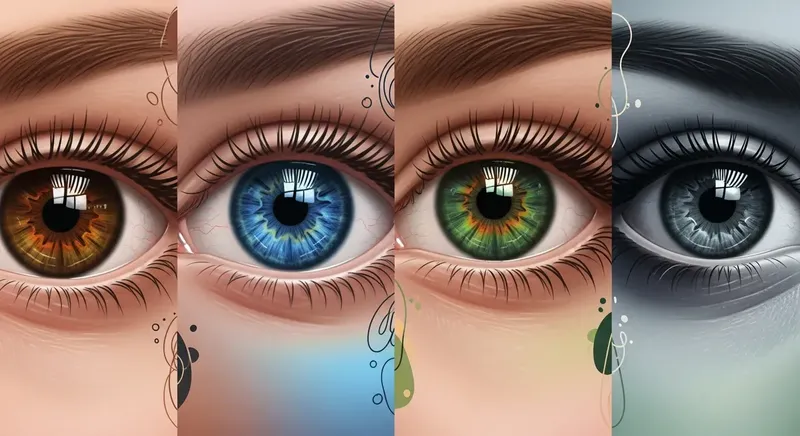
Brown eyes carry the world's most common pigment — melanin — and occur in over 55% of the global population. Green is the rarest natural eye color, found in fewer than 2% of people worldwide. Eye color is controlled by at least 16 genes working together, which is why two blue-eyed parents can occasionally produce a brown-eyed child.
This quiz isn't genetics — it's folk psychology. Twenty questions about your instincts, style, and temperament will nudge us toward one of four guesses: Brown, Blue, Green/Hazel, or Gray. Then you tell us whether we nailed it.
Think we can read you? Tap "Start Quiz" and find out.
Key Takeaways
- •Eye color is determined entirely by genetics — specifically, the concentration of melanin in the iris.
- •Brown is the world's most common eye color, found in over 55% of the global population.
- •Green is the rarest natural eye color, occurring in fewer than 2% of people worldwide.
- •Eye color can appear to shift slightly in different lighting due to how the iris muscles contract.
- •This quiz is a playful folk-psychology guessing game — it uses personality patterns, not science.
Can a quiz really guess your eye color?
Not with science, no — eye color comes down to genetics, not your favorite season or your go-to coffee order. But personality quizzes like this one lean on something more playful: the gentle patterns and stereotypes we all quietly carry about who we are. It's a guessing game, and a fun one.
Think of it like a magic trick. We can't actually see you, so we read your answers instead — your energy, your style, the vibe you give off — and make our best, boldest guess. Sometimes it's spookily accurate. Sometimes it's hilariously off. Either way, it's a good time.
The science of eye color
Eye color is determined by the amount and distribution of melanin (the same pigment responsible for skin and hair color) in the iris — the colored ring of muscle surrounding the pupil. More melanin produces darker colors; less melanin produces lighter colors. Brown is the world's most common eye color, present in over 55% of the global population, because higher melanin concentrations are dominant across most of human evolutionary history.
For many years, eye color was described as a simple one-gene, two-allele trait — brown dominant over blue. We now know it's controlled by at least 16 genes working together, with the OCA2 and HERC2 genes on chromosome 15 playing the largest roles. This polygenic inheritance is why two blue-eyed parents can occasionally have a brown-eyed child, and why the full range of colors — from near-black to amber to pale gray — exists.
Green eyes are the rarest natural color, occurring in fewer than 2% of people worldwide. Their color comes from a low melanin concentration combined with Rayleigh scattering of light — the same optical effect that makes the sky blue — producing the distinctive green or blue-green hue.
Why do eye colors seem to change?
Eye color isn't perfectly fixed. Several factors can make eyes appear to shift shade in everyday life. Lighting conditions dramatically alter apparent eye color — blue or green eyes particularly can appear more intense outdoors than under indoor lighting, and low light makes pupils dilate, which reduces the visible colored area of the iris.
Emotions and physical state also play a subtle role. The iris muscles contract or dilate the pupil in response to light, distance focus, and emotional arousal. Because pupil size changes the proportion of visible iris, a person's eyes can look slightly different colors across the day.
True iris color change (heterochromia — having eyes of different colors) affects about 1% of the population and is usually genetic. Acquired changes in eye color — particularly darkening in one eye — can occasionally signal ocular disease and should be evaluated by an eye doctor.
Folk psychology and eye color stereotypes
The folklore associating eye color with personality has a long history — ancient traditions linked light eyes to cold climates and 'northern' temperaments, dark eyes to warm climates and passionate temperaments. Modern pop psychology has elaborated these into stereotypes: brown-eyed people as warm and trustworthy, blue-eyed as confident and competitive, green-eyed as creative and mysterious.
The scientific evidence for actual personality differences by eye color is weak and inconsistent. A 2015 study in Current Psychology (Kleisner et al.) found that people rated brown-eyed faces as more trustworthy than blue-eyed faces — but this effect was driven by face shape associations, not eye color alone. Another study found brown-eyed men were rated as more dominant in competitive contexts, but again the effect was confounded with facial structure variables.
This quiz treats these associations as the playful cultural archetypes they are — not as scientific claims. The real fun is seeing whether our guess matches your actual eye color, not whether personality science has validated the link.
How is my result decided?
Each answer you pick nudges us toward one of four eye colors: Brown, Blue, Green/Hazel, or Gray. Whichever one your answers point to most often across all 20 questions becomes our final guess.
Answer honestly — the more like-you your choices are, the better our shot. Choosing aspirationally (what you wish you were like) rather than authentically (how you actually tend to behave) is what throws the guess off.
What if you guess wrong?
Then you've earned the right to gloat! This is all in good fun, so there's no real winning or losing. Screenshot your result, share it with a friend, and see whether the quiz reads them any better than it read you.
The most entertaining results are the completely wrong ones. If you have dark brown eyes and we guessed gray — tell us in the comments.